In the early morning of August 30, 2019, Jeff Bearance and his longtime friend David Dyki packed their car, kissed their wives goodbye and pointed themselves toward East Lansing.
Their destination was Old Hort at Michigan State University. For years, Jeff’s father, Skip, had run a tailgate in the grassy field behind the building. The Spartans’ home opener was the main event, and nobody missed a chance to celebrate. This was Jeff’s happy place. Today he needed it more than ever, a shelter from the overwhelming despair that had gripped him and his wife, Lauren, for the past 143 days.
Earlier that year, the couple was celebrating the upcoming birth of their first child. But 34 weeks into what had been a healthy pregnancy, Jeff and Lauren were told that their daughter had no heartbeat. One day later, Elizabeth Ann was delivered into the world without ever taking a breath.
“Jeff always wanted to be a dad,” David recalls. “They were definitely very, very excited about becoming parents. Really gung-ho about all those things.”
David and Jeff have been friends since high school and were roommates at MSU. Outside of the couple’s own parents, David was one of the first people Jeff called from the hospital to deliver the news of Elizabeth’s passing. In the days, weeks and months that followed, David and his wife were there for their friends as often as possible.
“They were very changed people,” David says. “They each dealt with it a little bit differently. Jeff tried to be upbeat for her, but you could tell he was different. Just a lot more withdrawn than normal. It’s tough to think about going through that. I don’t even know how you move on.”
The tailgate was a chance to try, or at least both thought so. Jeff was emotional that morning, but not melancholy in the way David expected. He moved with a certain wistfulness, as though the old Jeff was somehow hiding in old routines.
As a student, Jeff didn't tailgate much. It required painfully early mornings and long hours spent with his dad’s friends. When he graduated, he picked up one of his dad’s season tickets and was the first out of bed at 5 a.m. ‘Come on dad, you’re late!’ Jeff would text. By then, his view of tailgating had changed. It wasn’t about football; it was about family. When Jeff found out that he and Lauren were having a baby, he imagined carrying on that tradition with his own kids. Standing there now without Elizabeth, the pain felt new again.
“I didn’t think it would be as hard as it was,” Jeff says. “It all hit me that I couldn’t take my baby there. It wasn’t something I went in dreading, but then I was there, and it was like, maybe this is a mistake, maybe I’m not ready for this.”
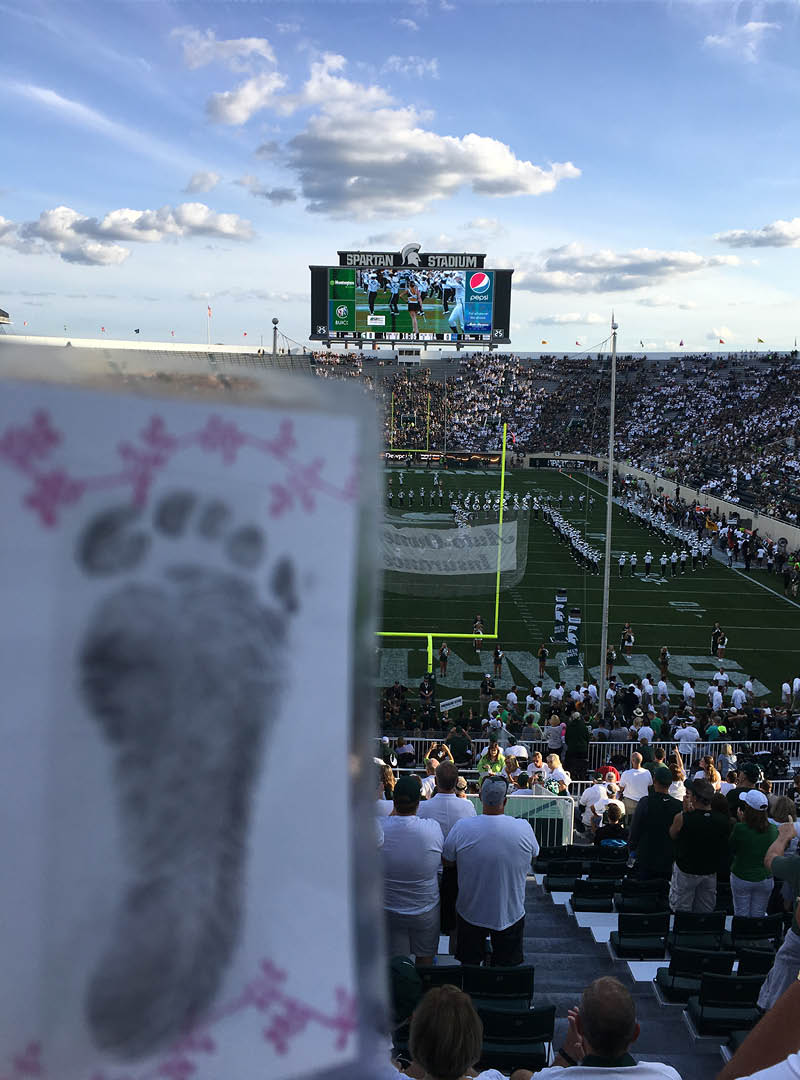
He decided to make the most of it. At the hospital, Jeff and Lauren were given a laminated card with Elizabeth’s footprint. Jeff always carries it in his wallet. That day, it came out again and again, and he snapped a few photos of her footprint held up against blue skies and Spartan green.
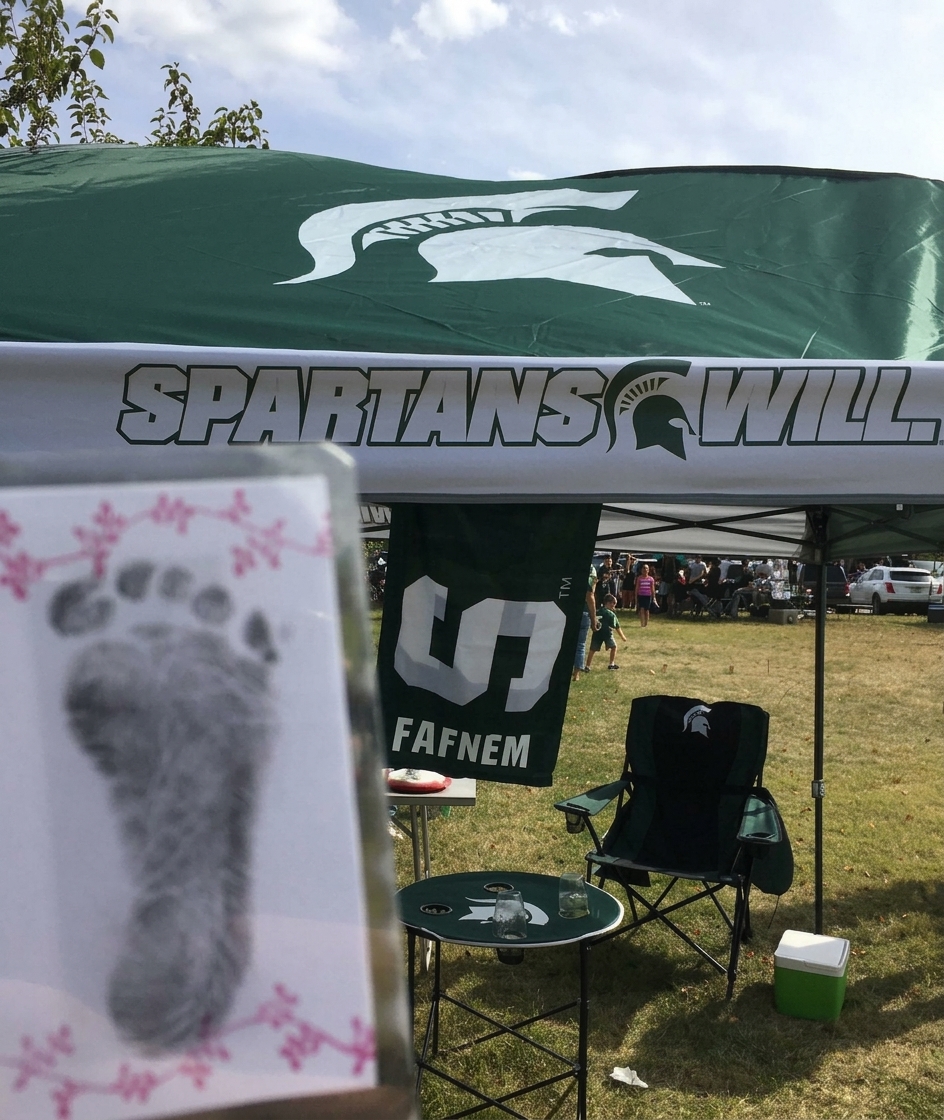
Elizabeth’s first tailgate.
“It’s something strange that happens,” says Lauren. “Life goes on, the mail still comes and you still have to function. After a few months, you want to start feeling better and you have these moments where you let your guard down—like maybe going to a tailgate—and you realize you’re still really broken.”
Jeff wasn’t the only person at the tailgate who was hurting. His family, friends and fellow Spartans knew their story, shared their pain. Together, they carved out a moment to celebrate everybody who couldn’t be there, including Elizabeth.
“When your child dies, you’re afraid no one is going to talk about them again,” Lauren says. “If there’s anything you can do for a family that is grieving the loss of their child, it’s to talk to them. Say their name. Remind them that they matter.
“I couldn’t imagine a world where people stopped saying her name. So, in the throes of our grief, we wanted to put together something to help other people.”
The hours and days after Elizabeth’s death were a blur. Lauren went into the hospital on Monday, delivered on Tuesday and was back home Wednesday afternoon. The following weeks they navigated the fog of a world that no longer made sense.
Of that time, they remember the strangeness of leaving the hospital. Led through unfamiliar, unseen corridors; down the staff elevator, into the basement, past the kitchens, through a winding maze toward the back exit. At the door, they paused so a nurse could check that the parking garage was free of new mothers or children. Waiting there, Lauren stared at the pink hat box in her lap.
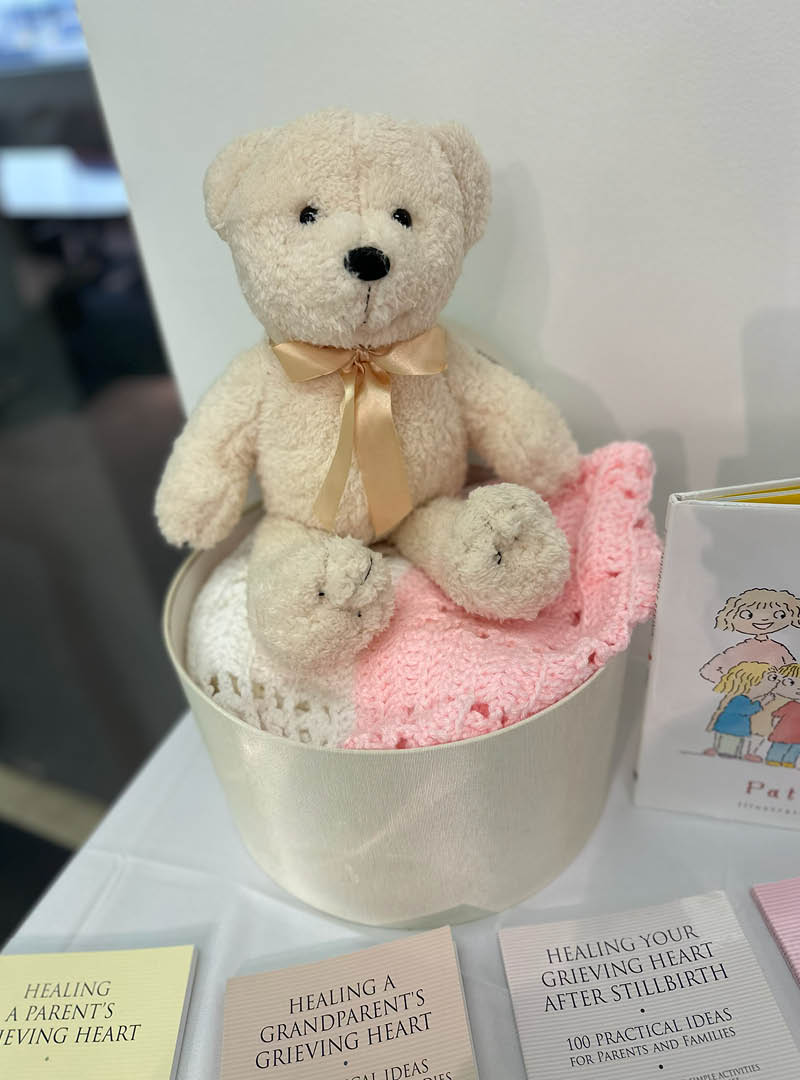
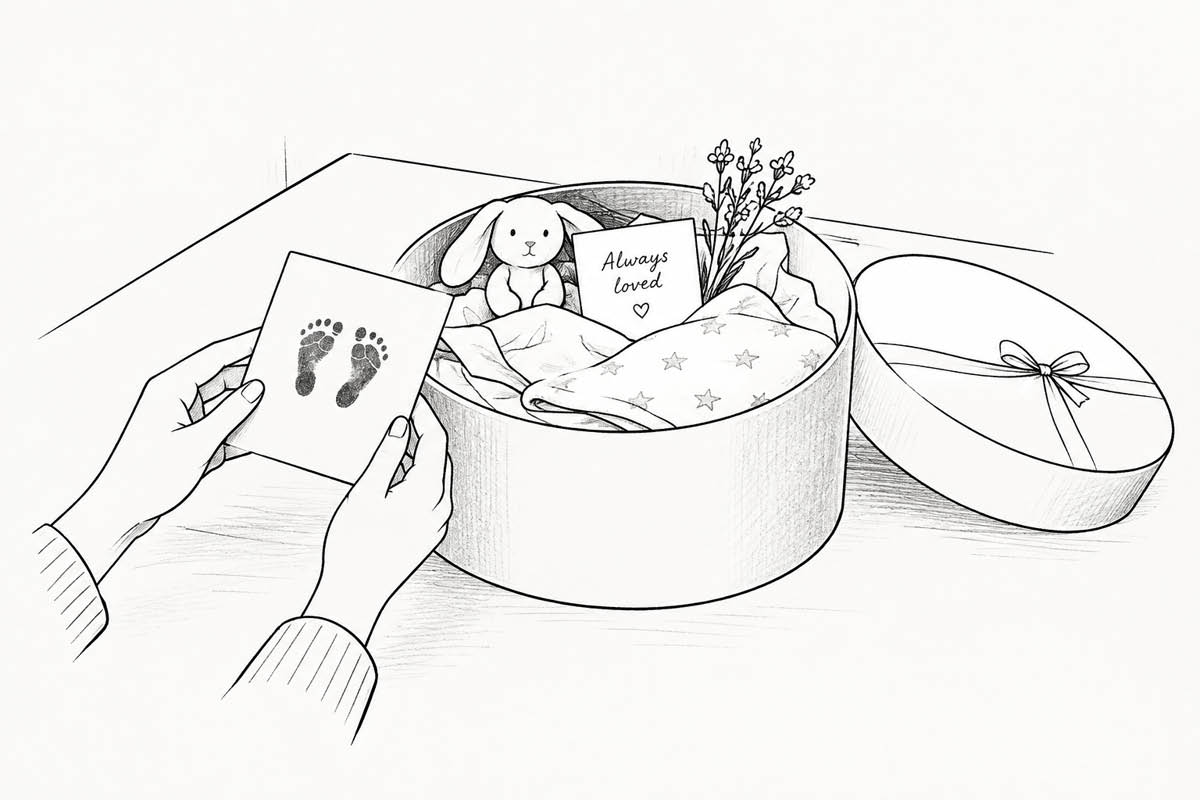
The box is given to all “loss parents” who come through the Corewell Health system. Inside was the laminated card with Elizabeth’s footprint along with other keepsakes and resources to help navigate their grief.
For a long time, the box also held all their anger. One item, a bookmark with another family’s story about losing their third child to a stillbirth, only made things worse.
“I remember thinking that I can’t take this on right now,” Lauren says. “I’m so sad, so confused, so angry at that point. I can’t feel anything for another person that experienced this but then gets to go home to their living children when I have to go home to an empty, quiet house.”
Back home, Lauren recalls thinking, ‘This can’t be it, can it? What do you mean that this is just over?’ She turned back to the box, this time looking for answers instead of blame.
She contacted Robbi Goltz, a NICU nurse who founded Corewell’s bereavement program. Jeff and Lauren had arrived at the hospital not planning to deliver, not even knowing if they were having a boy or girl. They had nothing. The program provided clothes for Elizabeth—an unexpected kindness in a time of turmoil.
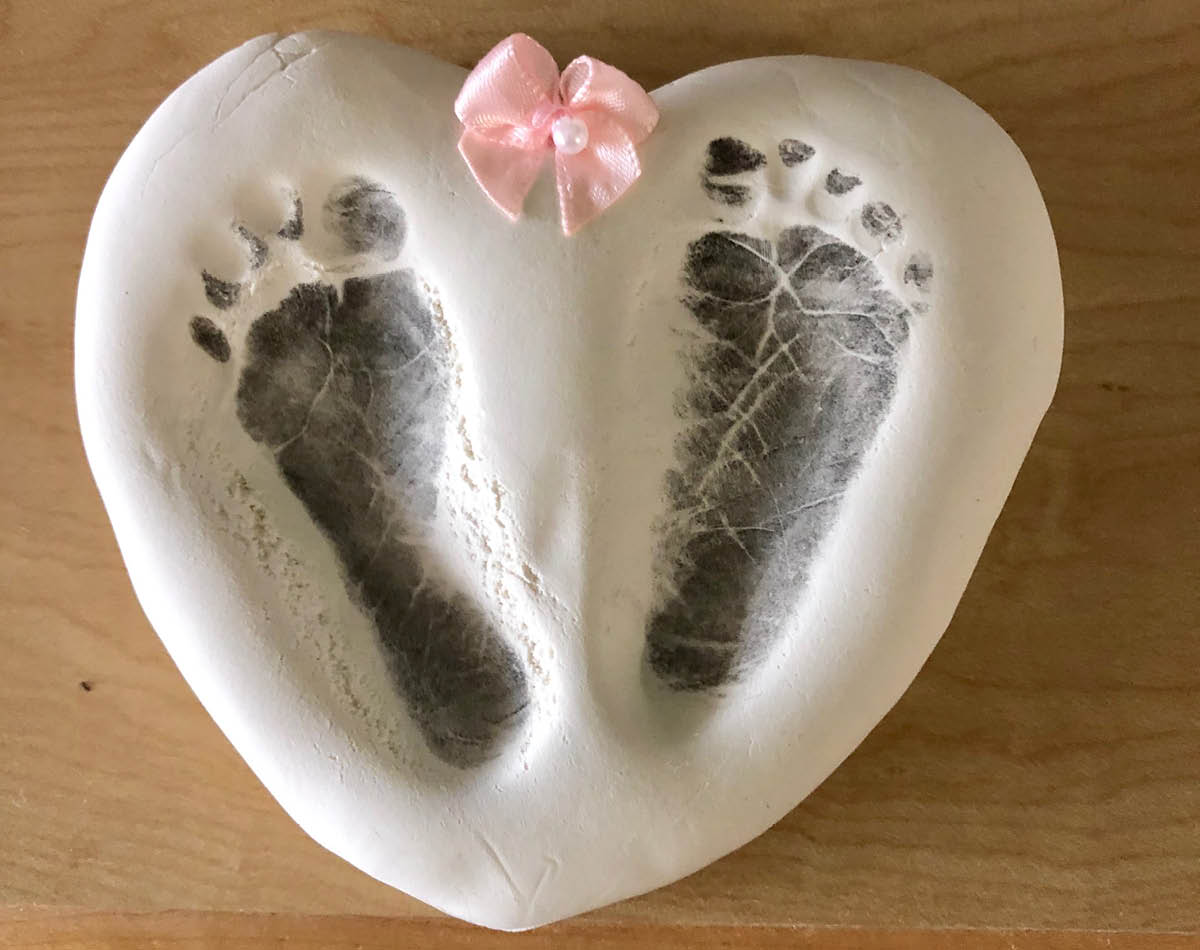
Robbi had started the program in her spare time. The program had grown quickly, but it relied on the generosity of others and struggled in years when donations were low. What Jeff and Lauren received was far from guaranteed.
“I remember Elizabeth. I remember being there, and I remember what her cheeks felt like,” Lauren says, “but to say that I remember looking at her hands or feet, I don’t remember that anymore. We’re fortunate to have these things to remember her by. I can’t imagine parents that have nothing.”
In July 2019, just over three months after their daughter’s passing, Jeff and Lauren founded Elizabeth’s Closet, a nonprofit organization to support families who experience pregnancy or infant loss. Since starting Elizabeth's Closet, they have donated over $100,000 to the Corewell Health Infant Bereavement Program, at times shouldering a large part of the cost of the lost boxes and their contents. Across the hospital network, 300-350 boxes are distributed each year.
“These little things that we didn’t want initially have come to mean so much to us,” Jeff says. “Those things you don’t realize in the moment. That’s what we wanted to be a bigger part of.”
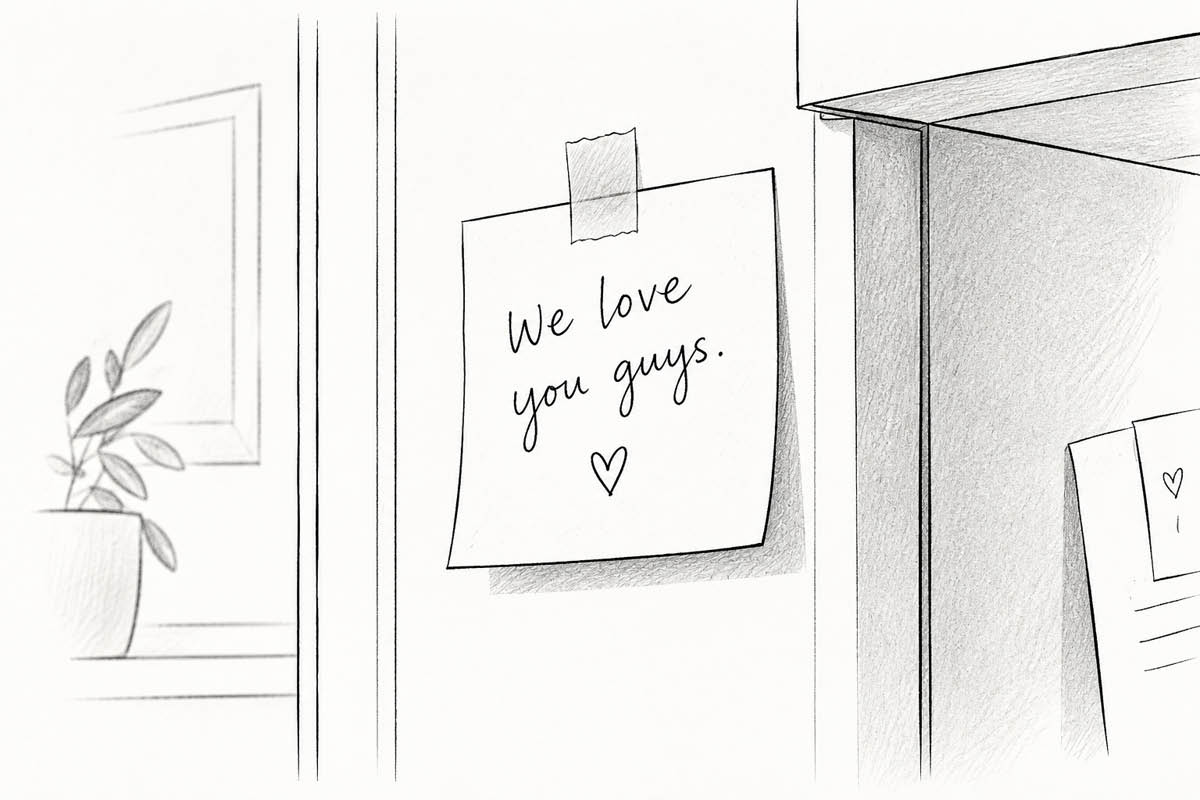
On the bottom edge of Lauren’s computer screen is a small, yellow sticky note. The adhesive wore off years ago. A piece of tape now holds it in place. It reads: We love you guys.
There are more nearby, if you know where to look. In the kitchen cabinets, the basement fridge, the laundry room, the guest bathroom. Notes of encouragement left behind while Jeff and Lauren were in the hospital, when friends and family came to clear the house of everything that had been prepared for the baby’s arrival.
It’s been seven years since Elizabeth’s passing, but many of the notes are still in their original places. Reminders that they are not alone.
“We’ve never removed them voluntarily,” says Jeff. “I still look at them every day.”
The loss of a child is an intensely lonely experience. Even with a strong support system, Jeff and Lauren struggled to share their grief, and others were afraid to ask. Elizabeth’s Closet was created to break that silence, to strengthen and extend the community that helped them survive. The small reminders that somebody is always there: an MSU tailgate, a sticky note.
“We wanted to create a world where we can talk about our children,” Lauren says. “Nobody knows how to talk about it, or you just aren’t supposed to. And all you need is someone to validate your grief.”
Betsy Schellenberg gave birth to her son, Isaiah, on February 27, 2024. That day, temperatures in metro Detroit hit a record-high 73 degrees. “We felt like it was special just for him,” Betsy says. “We nicknamed him our little sunshine man.”
Isaiah was born at just 24 weeks. He spent the four days of his life in the NICU before passing away on March 1. The hat box their family received that day included a teddy bear with a recording of Isaiah’s heartbeat, clothing, a lock of his hair, and, of course, a laminated footprint for Isaiah’s father.
Betsy’s own feelings about the box were complicated. As she struggled to grasp what was happening, the box was a reminder of reality. As she says, “There was so much anger, so much sadness. The box was this hard thing at first, but at some point, you’re ready to spend time with that stuff.”
That stuff led Betsy to Corewell’s expanding support network. A Spartan herself, Betsy, MS ’15, understood the importance of a strong community. She met Lauren in the summer of 2024 at a Celebration of Life event sponsored by Elizabeth’s Closet. Lauren spoke about her journey and about founding their nonprofit. Betsy and many other mothers at the event connected with Lauren’s vulnerability. They decided to stay in touch. From that moment, Elizabeth’s Closet started becoming something more like what Lauren had always envisioned.
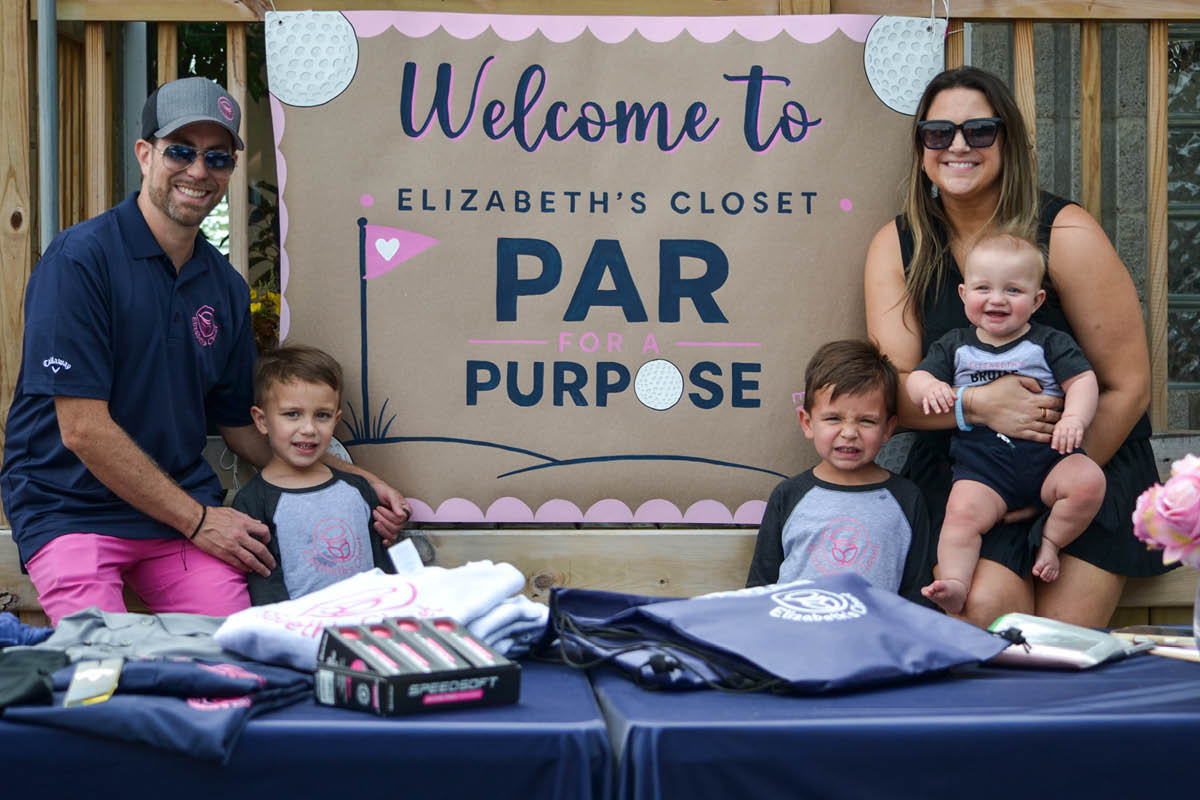
Over the past two years, Elizabeth’s Closet has led support groups and remembrance walks, shared resources and educational tools, created an online memory garden, and launched an Ambassador Network connecting even more families experiencing loss. Last month, they held their first in-person putt-putt golf fundraiser, bringing in over $12,000. The goal is to be there not only in the immediate aftermath when support is abundant, but in the long years that follow.
“Your life changes forever. It’s never the same. Hearing from someone else who’s walked that same path, made it through and come out the other side; it was inspiring,” Betsy says. “It’s the worst thing that you never expect to happen, and then somehow it ends up being this amazing group that you never wanted to be part of.”

It took years for Jeff and Lauren to reach a point where they could talk freely and honestly about what happened. As they recount their story, they both cry and smile at times, but they’ve learned that the painful parts are often what people need to hear most.
So, they talk about Elizabeth. They talk about the box. They talk about the fear of going home. And they talk about the day they learned their daughter was gone.
Jeff and Lauren’s life forever changed on Monday, April 8, 2019. The days before were a period of celebration. That Saturday, the couple took maternity photos and finally shared their news online. The congratulations poured in. The next day, they went out to celebrate a birthday for Jeff’s sister, Bree. Those moments are an important part of their retelling. A fault line between the lives they knew and the lives that followed.
At 8:30 Monday morning, Jeff and Lauren were in their doctor’s office for a routine visit. Neither had any reason to suspect something was wrong. As their doctor used a fetal Doppler to search for the heartbeat, he grew increasingly quiet.
“I’m just getting yours,” he said, “but the baby might be tucked away.” An ultrasound would probably clear everything up, and they wheeled over the cart. Lauren stared at the screen in vain, not knowing exactly what to look for but trying all the same. It was only when the doctor grabbed her hand that her fear spiked. “I’m sorry. There’s no heartbeat.”
He sent Jeff and Lauren across the street to the hospital. He said the equipment there could get a better reading. His calm demeanor was confusing. Something was wrong, Jeff and Lauren knew, but the seriousness was difficult to gauge. Jeff adopted a reassuring tone, perhaps for himself as much as Lauren. “Everything will be fine. This is all fine.”
But Lauren was already in a panic.
Six years earlier, Jeff’s family had endured a similar loss. His sister, Bree, had been pregnant with twins when she went into labor at 22 weeks. Hannah and Sophia were born, and both girls died soon after. Only one lived long enough to take a single breath. The toll on the family was immense, and Jeff was there through all of it. But this was different, wasn’t it? They had passed the first trimester, where miscarriages were more common, and the 22-week mark still seared in their memory. What could happen now?
By then, a nurse was already waiting for them at the hospital. In tears, she led Jeff and Lauren to their own room in the labor and delivery ward. “Are we being admitted?” Jeff remembers asking. “Are we not going home?” Lauren will never forget the nurse’s face as she delivered the news that their doctor only hinted at. “There is no heartbeat. Your baby didn’t make it. You need to call your family.”
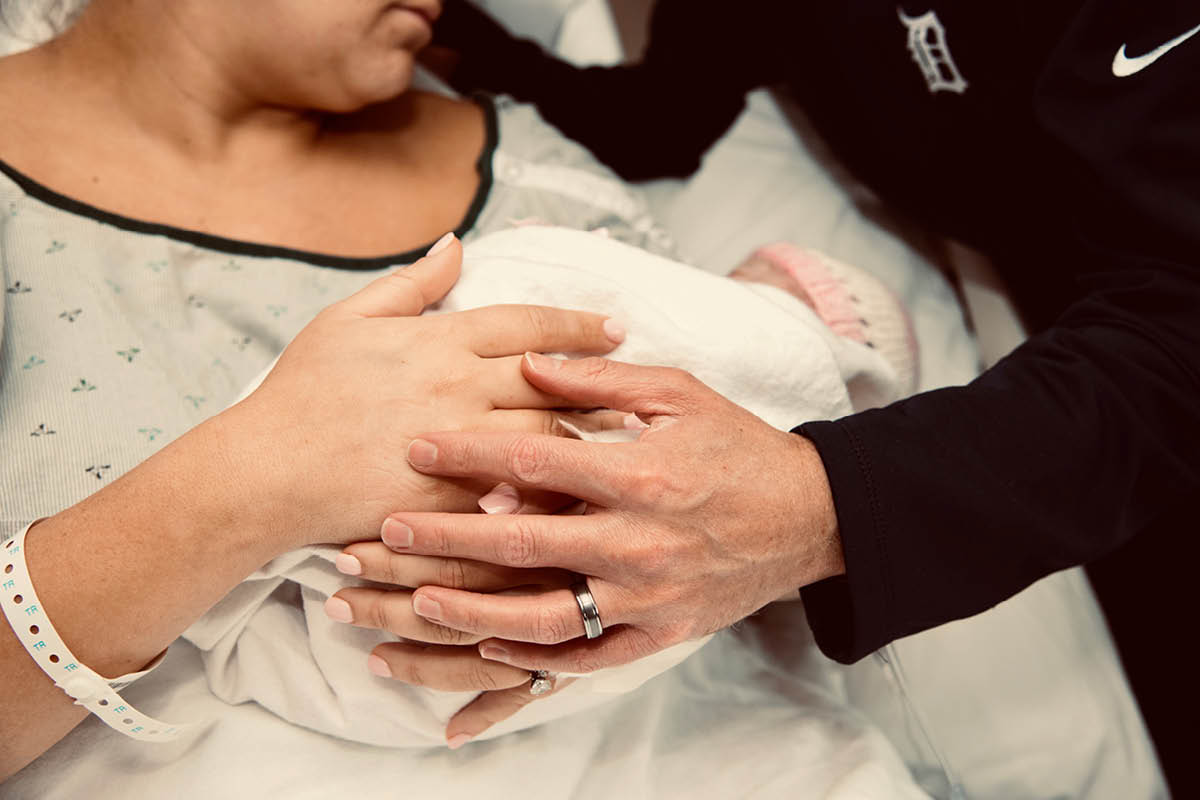
Jeff left his body. Lauren sat in shock. From somewhere far away, they heard the nurse saying they would still deliver the baby. And that they would do everything possible to make it easy on them. “It’s such a freaking cruel thing,” Lauren says. “You still have to give birth. You’re still in pain and it hurts the same as it would be delivering a baby that’s alive.”
Eventually, Jeff found his way into the bathroom, taking it upon himself to call their families.
He called Lauren’s parents first. It was barely 6 a.m. in California where they lived. Any call at that hour felt ominous. There was little to say. “I think the only words that came out of my mouth were, ‘I need you to get on an airplane right now, please. Come here now.’”
Calling his own parents was even harder. The pall of his sister’s painful loss still hung over the family. His dad, Skip, answered. For a while, there was nothing but silence. “Is everything okay?” his dad asked. Jeff felt as though his voice had been ripped from him. This didn’t make sense. It wasn’t fair.
Jeff struggled to find the words, any words. He managed only three.
“It happened again.”
The official cause of Elizabeth’s death was determined to be a nuchal cord. The umbilical cord had wrapped around her neck, cutting off her oxygen supply. Nuchal cords are common, happening in up to 30% of all pregnancies, but death is not. Fewer than 1% result in stillbirth.
“I don’t know if it ever feels real,” Lauren says. “Sometimes I feel like we’re telling a story of someone else’s life. I don’t know, maybe you dissociate just to survive because living it and remembering it every day is so heavy.”
Two years and one week after losing Elizabeth, Jeff and Lauren gave birth to their son, Jude.
“We joke that Jude crashed his sister’s birthday party,” Lauren says. “It’s good though. It doesn’t let the toughness of that week continue. It’s Jude’s birthday too, and he’s obviously worth celebrating.”
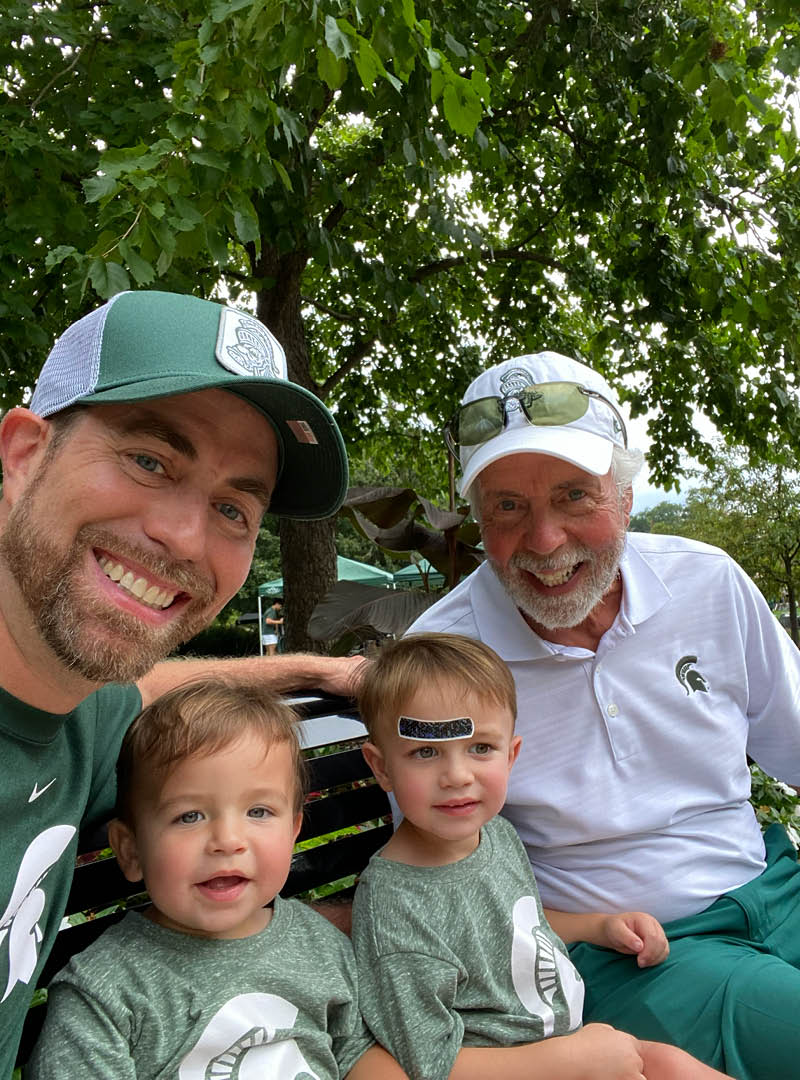
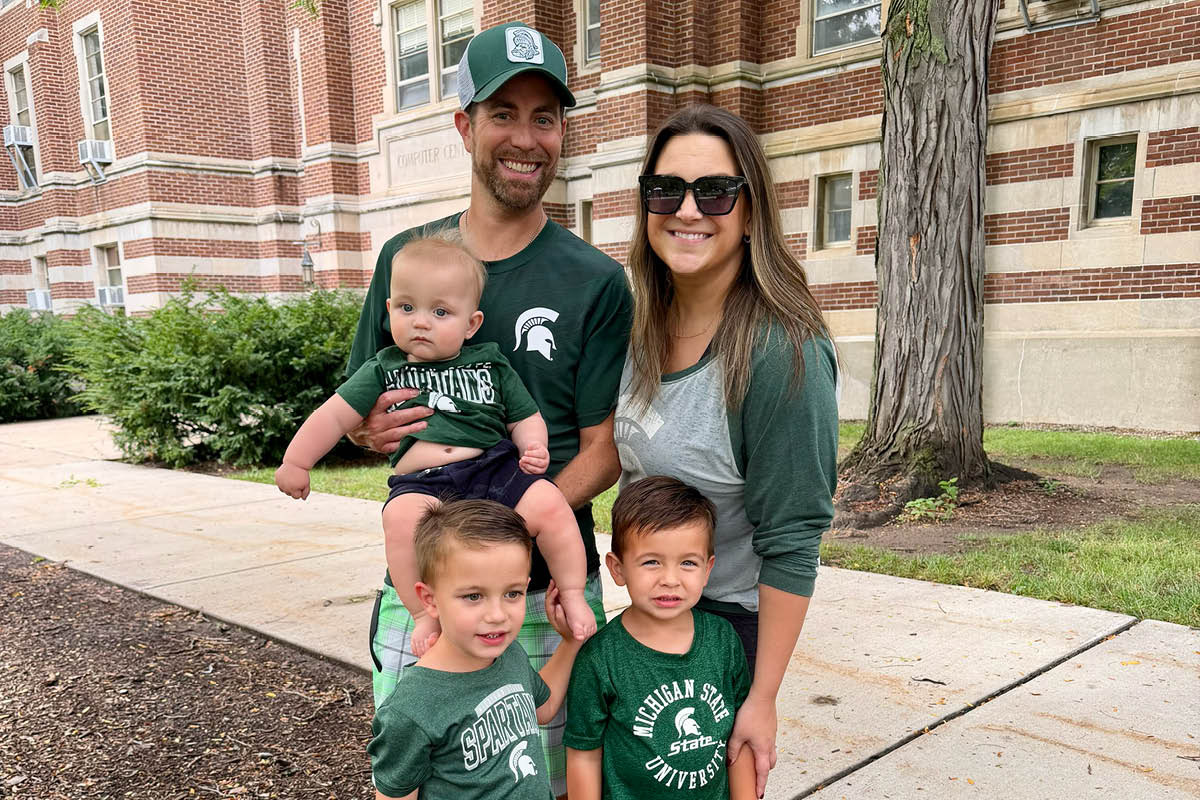
Jude attended his first MSU tailgate four months later. The Bearance family are Spartans through and through. Both of Jeff’s parents are alums, Skip, ’74, and Sue, ’73; along with his sister, Bree, ’03. Jude may be one day too, though he’s currently going through a rebellious phase.
“He’s in his Michigan era,” Lauren says. “Jeff tells him that he can’t go there, but he just says back, ‘I’m rooting for Michigan, and Mommy says you’ll love me wherever I go.’”
“Yeah, it hurts,” Jeff jokes. “I’m giving him the benefit of the doubt that he doesn’t understand it yet.”
They added another son, Liam, at the end of 2022, and a third, Milo, born in 2025.
With three boys, Lauren likes to get ahead of the inevitable question people ask when they meet her: ‘Are you going to try for a girl now?’ When Liam was born, Lauren felt anxious with each new interaction at the hospital. So, when a lactation consultant came into the room, Lauren told her about their loss and their long journey since. A few years earlier, the consultant had experienced her own loss. And something clicked.
“Oh my gosh,” the woman said. “You’re Elizabeth’s Closet!”
There was a time when Jeff and Lauren worried that nobody would say Elizabeth’s name. That the world would move on and forget. They don’t worry as much these days.
“It’s the best feeling when I hear her name,” Jeff says. “It makes it feel like she’s here.”
If they could send just one message, that would be it: don’t be afraid to talk. “I’m always thinking about her,” Lauren says. “Someone else saying her name warms my heart. It means you remembered her, and even if you never met her, she mattered.”
To support families facing pregnancy and infant loss, visit Elizabeth's Closet to find out how to get involved.