Jump to HeaderJump to Main ContentJump to Footer
Michigan State University
Spartan
  • Login
  • Shop
  • Alumni
  • Give Now

Spartan

  • Stories
    • Featured Alums
    • Philanthropy and Service
    • Arts and Culture
    • Athletics
    • Awards and Recognition
    • Business and Economy
    • Education and Learning
    • Engineering Science and Technology
    • Government and Society
    • Health and Medicine
    • Leadership and Impact
    • Media and Communications
    • Plant Science and Agriculture
    • Student and Campus Experience
    • Sustainability
    Beaumont Tower framed by pine trees

    Read inspiring Spartan stories

    View all Stories
  • |
  • Spartan Magazine
    • Current Issue
    • Issue Archive
    Student facing away from camera with Spartan flag draped around back

    Submit Story Idea
  • |
  • Submissions
    • Submit Class Note
    • Submit Letter to the Editor
    • Submit Story Idea
  • |
  • Alumni
    • About
    • Connect
    • Serve
    • Sparty
  • |
  • Giving to MSU
    • Campaign
    • Ways to Give
    • Gifts in Action
    • Reasons to Give
    • Opportunities to Support
Spartan
  • Stories
  • Spartan Magazine
  • Submissions
  • Alumni
  • Giving to MSU

< Stories

  • Featured Alums
  • Philanthropy and Service
  • Arts and Culture
  • Athletics
  • Awards and Recognition
  • Business and Economy
  • Education and Learning
  • Engineering Science and Technology
  • Government and Society
  • Health and Medicine
  • Leadership and Impact
  • Media and Communications
  • Plant Science and Agriculture
  • Student and Campus Experience
  • Sustainability
Beaumont Tower framed by pine trees

Read inspiring Spartan stories

View all Stories

< Spartan Magazine

  • Current Issue
  • Issue Archive
Student facing away from camera with Spartan flag draped around back

Submit Story Idea

< Submissions

  • Submit Class Note
  • Submit Letter to the Editor
  • Submit Story Idea

< Alumni

  • About
  • Connect
  • Serve
  • Sparty

< Giving to MSU

  • Campaign
  • Ways to Give
  • Gifts in Action
  • Reasons to Give
  • Opportunities to Support
  • Login
  • Shop
  • Alumni
  • Give Now

Oct. 12, 2020

Liberty Hyde Bailey: William J. Beal's Brilliant Protégé

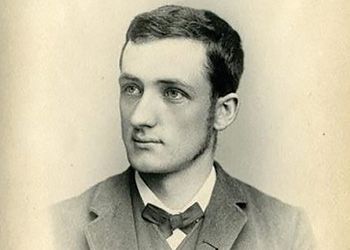
While Beal educated hundreds of botanists, horticulturists and foresters at MSU, one stands above: Liberty Hyde Bailey, the father of modern horticulture and a powerful figure in improving rural American life.

Born on a fruit farm in South Haven, Michigan, in 1858, Bailey appeased his youthful curiosity about the natural world by touring local forests, devouring Charles Darwin’s “On the Origins of Species” and successfully courting Beal to speak in South Haven. Bailey’s teenage encounter with Beal accelerated his fascination with the natural world and spurred his enrollment at Michigan Agricultural College (M.A.C.) in 1877, where he thrived under Beal’s guidance. 

After Bailey earned his horticulture degree from M.A.C. in 1882, Beal recommended him for an assistantship at Harvard University. Bailey worked as world-renowned botanist Asa Gray’s herbarium assistant for two years before returning to M.A.C. in 1885 to launch the nation’s first horticulture department. Following Beal’s lead, Bailey favored hands-on instruction, distributing pumpkin seeds to students to stress small beginnings and sharing pumpkin vines to illustrate the massive fruits that small plants could bear.

After a three-year run at M.A.C., Bailey accepted a position as chair of practical and experimental horticulture at Cornell University. Over a 25-year run at Cornell, Bailey established himself as a prominent teacher, researcher and administrator, a scholarly life that included the publication of 65 books, more than 1,300 articles and 24 albums of plant photography. After retiring in 1913, he traveled the world—to China, New Zealand, Brazil and other locales—to cultivate his collection of some 140,000 plant specimens.

A page from the Cyclopedia of American Agriculture
Bailey Books
Bailey and Beal
Asa Gray
Bailey with family, including wife, Annette Smith
A page from the Cyclopedia of American Agriculture
Bailey Books
A page from the Cyclopedia of American Agriculture, edited by Bailey.
Bailey wrote 66 horticulture books and contributed 700 academic research papers during his career.
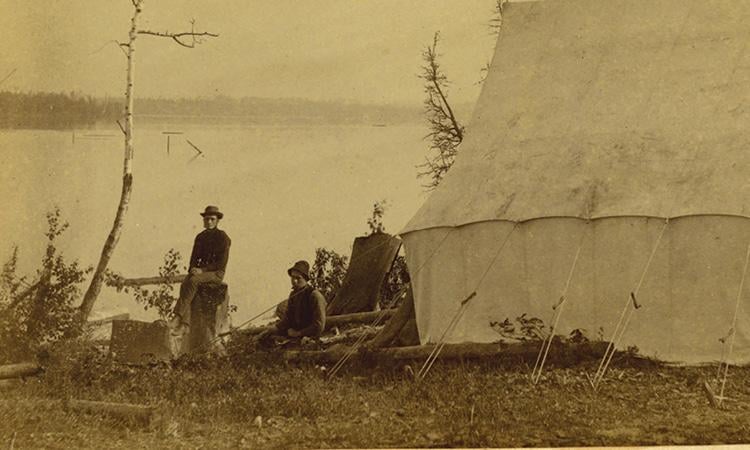
In 1888, Beal and Bailey trekked to a landscape denuded of trees by lumberjacks to determine which trees would be best for reforestation of northern Michigan.
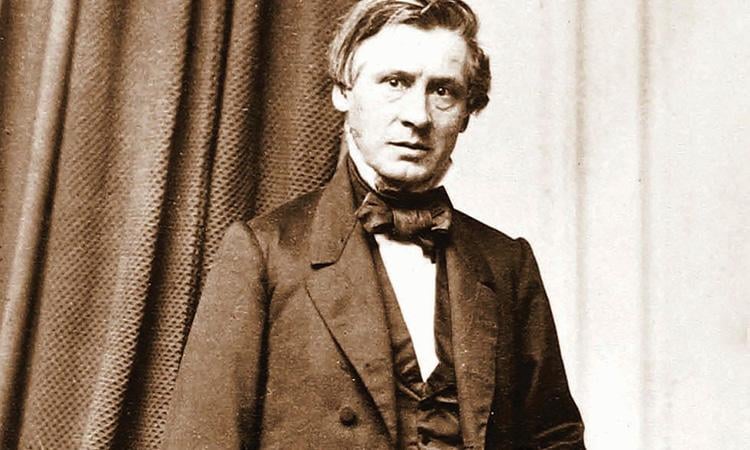
Harvard University professor Asa Gray—who unified taxonomic knowledge of North American plants—mentored and inspired the work of both Bailey and Beal.
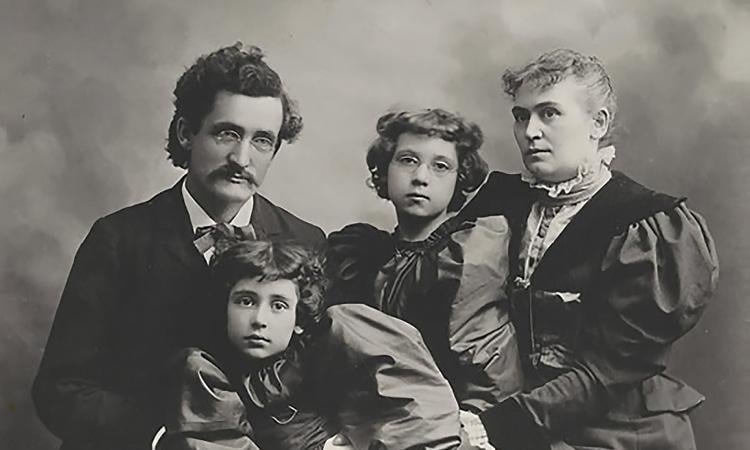
Bailey married Annette Smith, the daughter of a Michigan cattle breeder. They had two daughters.
A page from the Cyclopedia of American Agriculture, edited by Bailey.
Bailey wrote 66 horticulture books and contributed 700 academic research papers during his career.

01 / 05

Ever mindful of his small-town roots, Bailey developed an extension program to teach natural studies in rural areas, spearheaded the creation of the 4-H movement and encouraged technological innovation on the family farm. At the request of U.S. President Theodore Roosevelt, he chaired the national Commission on Country Life, whose work launched a parcel post system, a nationwide federal extension service and the federally supported rural electrification program.

Like Beal, Bailey, too, embraced an interdisciplinary mindset. He published poetry collections and philosophical musings and commanded respect among country folk as well as the metropolitan elite, twice being urged to run for governor of New York. The National Academy of Sciences called Bailey “a man of incomparable vision and prodigious energy,” while former MSU Department of Horticulture head H.B. Tukey said: “His interests were so great and his coverage so broad that he stood as a dozen men.”

Though Bailey died in 1954 at age 96, his influence endures. MSU features Bailey Hall, home to the living-learning Residential Initiative for the Study of the Environment (RISE), as well as the Bailey Scholars program that promotes lifelong learning. 


Read more on what William J. Beal built at MSU

William Beal Collage

What Beal Built

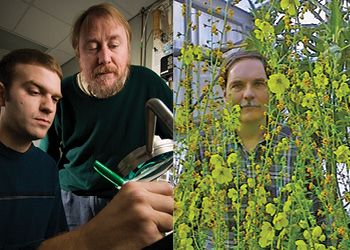
Nearly a century after his death, the ambitious, curious and forward-thinking spirit of pioneering MSU professor William James Beal endures and inspires.

Spartan Magazine, Fall 2020
Richard Lenski and Frank Telewski

The Power of Basic Science

“This experiment has shown us so much about the evolutionary process in microbes and spurred so many new questions."

Spartan Magazine, Fall 2020
Seeds at the Svalbard Global Seed Vault

How the Svalbard Global Seed Vault Built off of Beal

Saving seeds has become one of the world's most important projects.

Spartan Magazine, Fall 2020
Liberty Hyde Bailey

Liberty Hyde Bailey: William J. Beal's Brilliant Protégé

Liberty Hyde Bailey created a lasting legacy, just like his mentor.

Spartan Magazine, Fall 2020
The W.J. Beal Botanical Garden

The Beal Garden

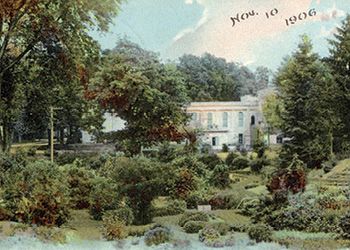
The W.J. Beal Botanical Garden, established in 1873 by Professor William James Beal, is the oldest continuously operated university botanical garden of its kind in the United State

Spartan Magazine, Fall 2020

University Advancement

  • Mission
  • What We Do
  • Careers
  • Student Opportunities
  • Staff Directory

Alumni

  • About
  • Connect
  • Serve
  • Sparty
  • FAQs

Giving To MSU

  • Campaign
  • Ways to Give
  • Gifts in Action
  • Reasons to Give
  • Opportunities to Support

Spartan Stories

  • All Stories
  • Spartan Magazine Current
  • Spartan Magazine Archive
  • Submissions

Contact Us

(517) 884-1000

Email

univdev@msu.edu

Address

University Advancement 535 Chestnut Rd. Room 300 East Lansing, MI 48824

Follow Us

  • Visit our Facebook page
  • Visit our page on X
  • Visit our Instagram page
  • Visit our LinkedIn page
  • Visit our YouTube page

If you're having accessibility issues, please let us know.

  • Contact Information|
  • Site Map|
  • Privacy Statement|
  • Site Accessibility|
  • Call MSU: (517) 355-1855|
  • Visit: msu.edu|
  • Notice of Nondiscrimination|

SPARTANS WILL|© Michigan State University|