Jump to HeaderJump to Main ContentJump to Footer
Michigan State University
Spartan
  • Login
  • Shop
  • Alumni
  • Give Now

Spartan

  • Stories
    • Featured Alums
    • Philanthropy and Service
    • Arts and Culture
    • Athletics
    • Awards and Recognition
    • Business and Economy
    • Education and Learning
    • Engineering Science and Technology
    • Government and Society
    • Health and Medicine
    • Leadership and Impact
    • Media and Communications
    • Plant Science and Agriculture
    • Student and Campus Experience
    • Sustainability
    Beaumont Tower framed by pine trees

    Read inspiring Spartan stories

    View all Stories
  • |
  • Spartan Magazine
    • Current Issue
    • Issue Archive
    Student facing away from camera with Spartan flag draped around back

    Submit Story Idea
  • |
  • Submissions
    • Submit Class Note
    • Submit Letter to the Editor
    • Submit Story Idea
  • |
  • Alumni
    • About
    • Connect
    • Serve
    • Sparty
  • |
  • Giving to MSU
    • Campaign
    • Ways to Give
    • Gifts in Action
    • Reasons to Give
    • Opportunities to Support
Spartan
  • Stories
  • Spartan Magazine
  • Submissions
  • Alumni
  • Giving to MSU

< Stories

  • Featured Alums
  • Philanthropy and Service
  • Arts and Culture
  • Athletics
  • Awards and Recognition
  • Business and Economy
  • Education and Learning
  • Engineering Science and Technology
  • Government and Society
  • Health and Medicine
  • Leadership and Impact
  • Media and Communications
  • Plant Science and Agriculture
  • Student and Campus Experience
  • Sustainability
Beaumont Tower framed by pine trees

Read inspiring Spartan stories

View all Stories

< Spartan Magazine

  • Current Issue
  • Issue Archive
Student facing away from camera with Spartan flag draped around back

Submit Story Idea

< Submissions

  • Submit Class Note
  • Submit Letter to the Editor
  • Submit Story Idea

< Alumni

  • About
  • Connect
  • Serve
  • Sparty

< Giving to MSU

  • Campaign
  • Ways to Give
  • Gifts in Action
  • Reasons to Give
  • Opportunities to Support
  • Login
  • Shop
  • Alumni
  • Give Now

Sept. 28, 2021

MSU Saved My Life

The National Cancer Institute was established by the National Cancer Act of 1971, signed into law by President Richard Nixon. It represented the U.S. commitment to what President Nixon described as the “war on cancer,” which had become the nation’s second-leading cause of death by 1970. Judith Pearson, a 1975 graduate of the College of Arts and Letters, biographer and cancer survivor, shares her battle with the disease and how a major discovery at MSU helped to save her life.

Time is a funny thing. At the very moment we experience an event, an entire spectrum of human events is unfolding across the globe, involving the world’s other 7.5 billion people. And I find it particularly fascinating when some of those seemingly unrelated events collide. 

Hear more from Judith in the podcast episode below: 


When Dr. Rosenberg discovered what would come to be called cisplatin, I was in seventh grade. It didn’t matter that high school graduation was six years off; my university destination had been pre-determined. My father (Edwin Foster, ’50, College of Agriculture and Natural Resources) had made it clear that my brother (Chip Foster, ’82, College of Agriculture and Natural Resources) and I could go to any college in the city of East Lansing. It sounds cute, but he wasn’t kidding. Thus, when September 1971 rolled around, I officially became a Spartan. 

As I was settling into 313 W. Butterfield Hall, the grim survival rate for those diagnosed with cancer was less than 50%. Treatment options were few. But research in anti-cancer drugs (later called chemotherapy) was on the rise, as was combining those drugs into a powerful cancer-killing cocktail. Cisplatin would become “the backbone of combination chemotherapy.” In addition, cancer research was about to be accelerated by the National Cancer Act.

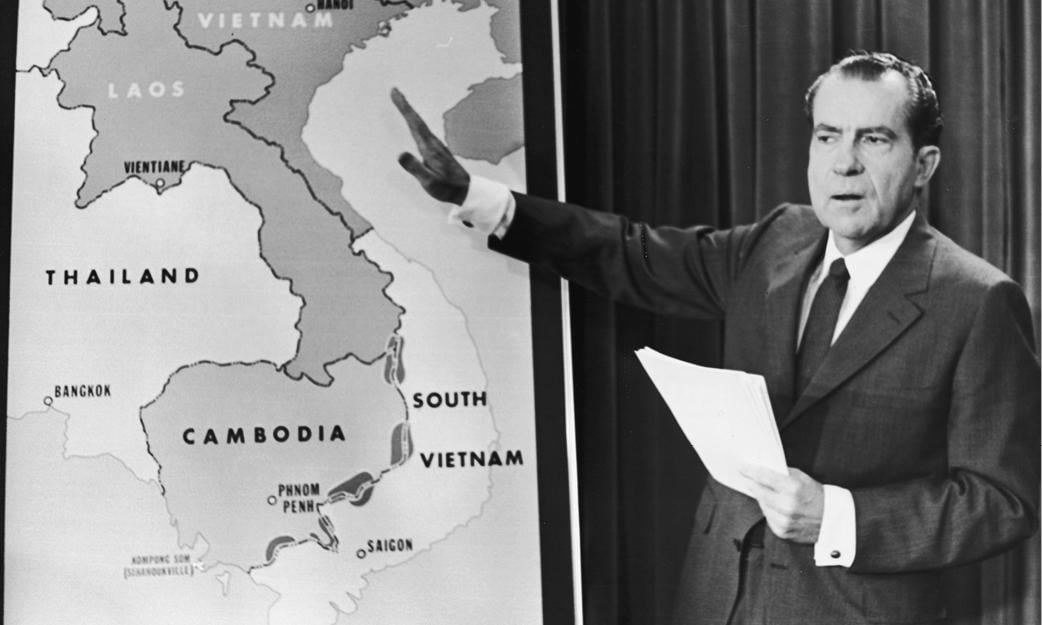
A year before I arrived on campus, beleaguered President Richard Nixon’s approval rating was as grim as the cancer statistics. He had won the 1968 election by promising a “secret” plan to end the war in Southeast Asia. But no plan had materialized. Over on Capitol Hill, however, a heated discussion about national health had become a full-blown fire. And Nixon’s advisers seized upon it. The president could officially declare war on cancer by increasing research funding. Someone even suggested the disease would be cured by the nation’s 1976 bicentennial. It was a win-win for patients and the president alike. Taking on cancer with such bravado could (and did) return Nixon to the White House for a second term. It was a fight behind which everyone—Republicans and Democrats—could rally. 

So while I was enjoying Christmas break amid family and friends, Nixon’s war on cancer officially began when he signed the act on December 23, 1971. It promised an unprecedented $1.6 billion ($8.3 billion today) over three years for cancer research. Perfect timing for cisplatin, which went into human clinical trials in 1972 (the year I officially became a French major). I graduated in 1975, and when the bicentennial celebration arrived the next year, Nixon had resigned in disgrace, and cancer was still killing. 
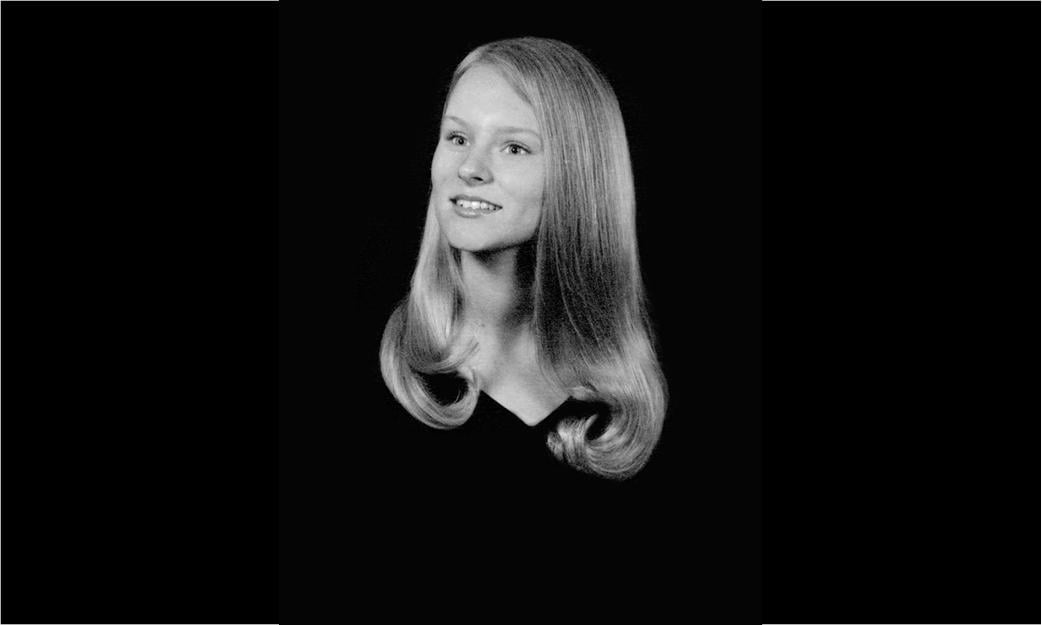
Judith Pearson senior portrait
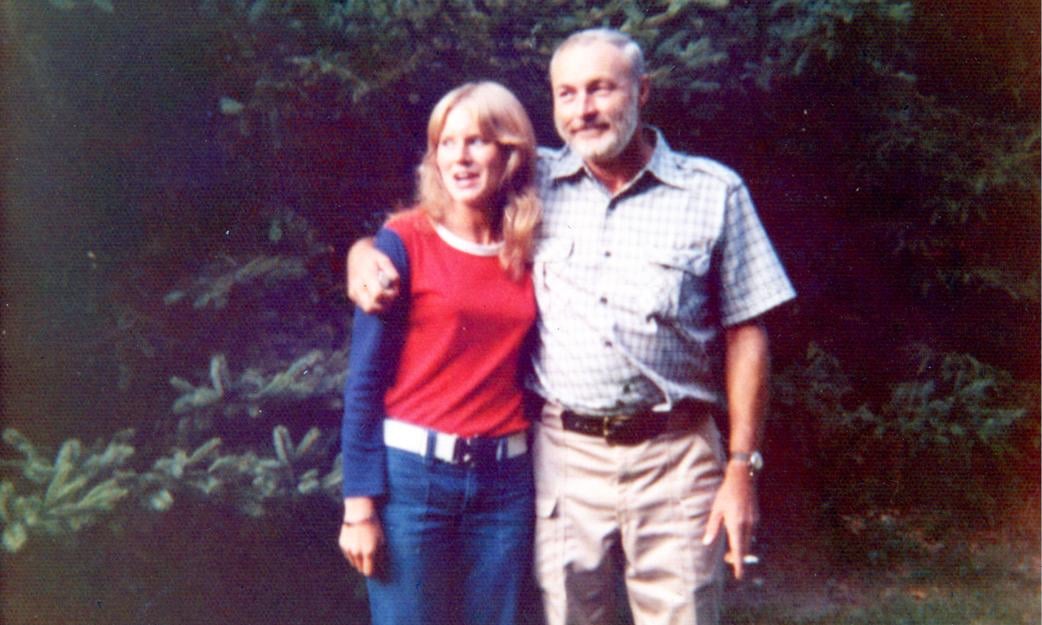
Judith Pearson and father
1972 MSU Cheerleaders
President Nixon
Judith Pearson senior portrait
Judith Pearson and father
Judith’s high school senior portrait, taken just before she headed to MSU.
Judith’s dad, Edwin Foster, who served in the U.S. Air Force and fought in World War II, was a Spartan, class of 1950. He always told Judith she could go to any college she wanted...in the city of East Lansing.
Rocking the block “S” letter on their sweaters, the Spartan cheerleaders in 1972 also knew how to whip up enthusiasm.
Nixon’s war on cancer officially began when he signed the National Cancer Act on December 23, 1971. It promised an unprecedented $1.6 billion ($8.3 billion today) over three years for cancer research.
Judith’s high school senior portrait, taken just before she headed to MSU.
Judith’s dad, Edwin Foster, who served in the U.S. Air Force and fought in World War II, was a Spartan, class of 1950. He always told Judith she could go to any college she wanted...in the city of East Lansing.

01 / 04

By the time cisplatin received Food and Drug Administration approval in 1978, I was married, teaching high school French and coaching basketball, completely unaware of these cancer-related events. I was healthy. My family was healthy. I knew nothing—and I mean nothing—about cancer until April 8, 2011. Two months after a clean mammogram, I found a lump in my cleavage and was diagnosed with triple-negative breast cancer. Following a mastectomy, my oncologist told me this type of cancer was particularly aggressive, requiring equally aggressive chemotherapy. And it would begin with cisplatin. The drug’s initial success had been in testicular cancer, and then ovarian. Since the cell structure of triple-negative is more akin to ovarian than other breast cancers, it was a crucial workhorse to deliver me to the land of NED (the medical acronym for no evidence of disease).

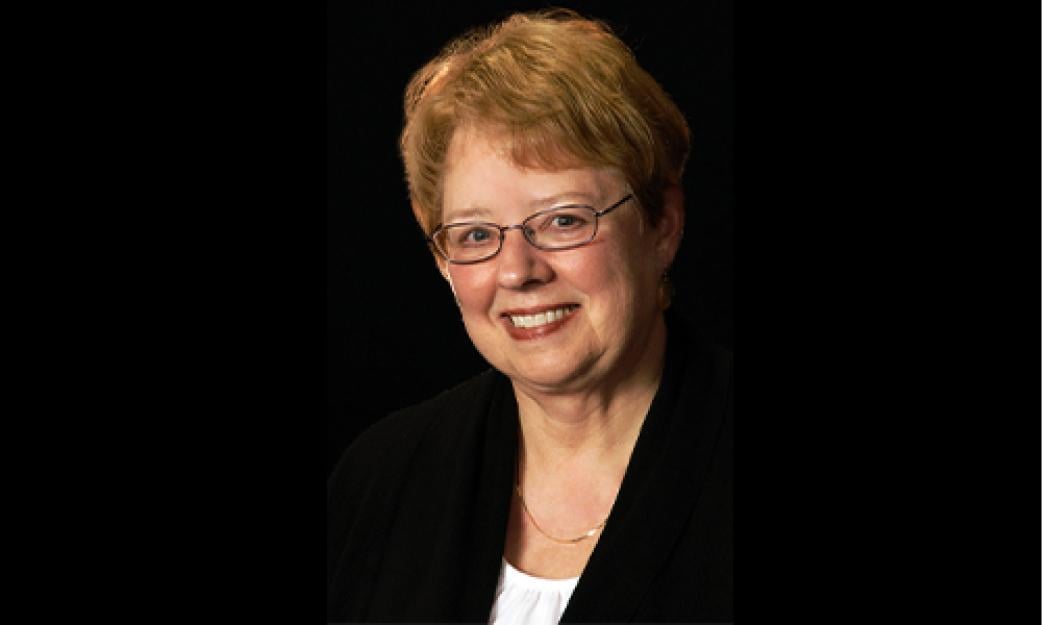
But cisplatin is not without its problems. The horrible side effects include severe nausea and vomiting, which I can thoroughly attest to. Dr. Gwen Wyatt, MSU professor of Nursing, has devoted decades working with advanced-stage breast cancer survivors. Her compassion for them was clearly evident in a recent chat. She told me the patients she had encountered throughout her career have been her inspiration. And she explained that while doctors prescribe and treat, the nurses look at how the patients respond to those treatments. Her research into survivors’ quality of life, as well as complementary and integrative cancer care, has been ground-breaking, including using reflexology and teaching patients self-administered acupressure for fatigue. If only I had known Dr. Wyatt during and after my own treatment!

I have one more fascinating event collision to share. I am a biographer by profession. My career was derailed by my cancer diagnosis, so I founded a small nonprofit while waiting to discover the next great story to tell. The nonprofit led me to an amazing woman survivor whose story is really great, and she became the inspiration for my most recent book. Published in March of this year, “From Shadows to Life: A Biography of the Cancer Survivorship Movement” is the shared history of the 17 million cancer survivors in America.

 From Shadows to Life book cover
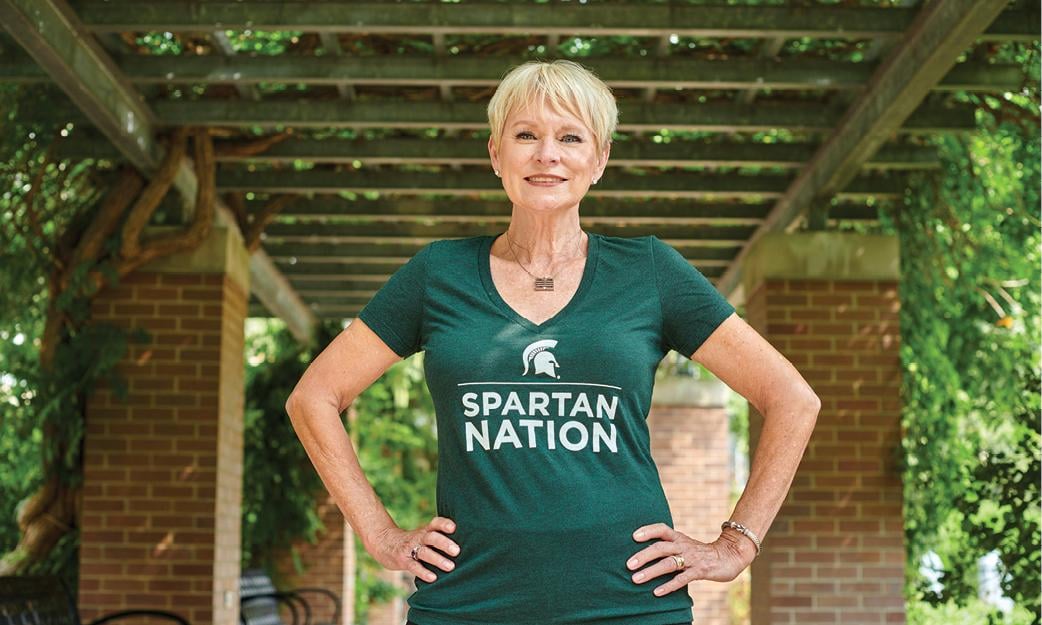
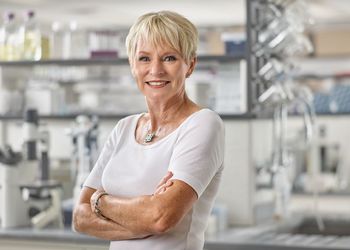
Judith Pearson wearing MSU t-shirt
Dr. Gwen Wyatt
 From Shadows to Life book cover
Judith Pearson wearing MSU t-shirt
Published in March 2021, Judith’s latest book is titled “From Shadows to Life: A Biography of the Cancer Survivorship Movement.” It is the shared history of the 17 million cancer survivors in America.
Having beaten cancer, Judith keeps strong by helping others. She started A 2nd Act, a nonprofit that supports and celebrates women survivors of all cancers who are giving back to help others in need.
Dr. Gwen Wyatt, MSU professor of Nursing, devoted decades working with advanced-stage breast cancer survivors.
Published in March 2021, Judith’s latest book is titled “From Shadows to Life: A Biography of the Cancer Survivorship Movement.” It is the shared history of the 17 million cancer survivors in America.
Having beaten cancer, Judith keeps strong by helping others. She started A 2nd Act, a nonprofit that supports and celebrates women survivors of all cancers who are giving back to help others in need.

01 / 03

Until the last part of the 20th century, cancer patients and survivors were called “victims,” not a description I would have ever accepted. As the disease was thought to be contagious, the “victims” lived in the shadows as social pariahs. Rarely was their illness discussed, even within the confines of the family. If ever their secret came out, survivors (who couldn’t be called as such until a moving target of time had passed) could lose their jobs, couldn’t join in the military, couldn’t adopt children and more. It was only when a group of 23 individuals, all with a connection to cancer—and including the amazing woman I was introduced to—came together in 1986. The discrimination and victimhood changed when they launched the cancer survivorship movement. And my book research is the reason I now know all these facts.

The timing of this book’s publication is perfectly prophetic. In addition to this year being the 50th anniversary of my freshman arrival at MSU, it’s also the 50th for Nixon’s war on cancer. It is the 35th anniversary of the cancer survivorship movement’s founding. And finally, it is the 10th anniversary of my diagnosis. 

The achievements of Dr. Rosenberg and Loretta VanCamp, his laboratory supervisor, as well as the work of the cancer survivorship movement founders are proof positive of Margaret Mead’s famous quote. Although she died of pancreatic cancer the very year cisplatin was FDA approved, these words have made certain her name will not be forgotten: “Never doubt that a small group of thoughtful, committed individuals can change the world. In fact, it’s the only thing that ever has.”


Cisplatin's Ripple Effect

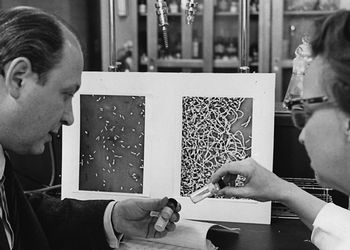
Dr. Rosenberg and Dr. VanCamp

One Lab, One Discovery: The Continuous Ripple Effect

The late Barnett “Barney” Rosenberg used the word serendipity often in recounting the story of cisplatin, the anti-cancer drug first discovered in his MSU research lab.

Spartan Magazine, Fall 2021
Judith Pearson

MSU Saved My Life

Judith Pearson, '75, a biographer and cancer survivor, shares her battle with the disease and how a major discovery at MSU helped to save her life.

Spartan Magazine, Fall 2021

University Advancement

  • Mission
  • What We Do
  • Careers
  • Student Opportunities
  • Staff Directory

Alumni

  • About
  • Connect
  • Serve
  • Sparty
  • FAQs

Giving To MSU

  • Campaign
  • Ways to Give
  • Gifts in Action
  • Reasons to Give
  • Opportunities to Support

Spartan Stories

  • All Stories
  • Spartan Magazine Current
  • Spartan Magazine Archive
  • Submissions

Contact Us

(517) 884-1000

Email

univdev@msu.edu

Address

University Advancement 535 Chestnut Rd. Room 300 East Lansing, MI 48824

Follow Us

  • Visit our Facebook page
  • Visit our page on X
  • Visit our Instagram page
  • Visit our LinkedIn page
  • Visit our YouTube page

If you're having accessibility issues, please let us know.

  • Contact Information|
  • Site Map|
  • Privacy Statement|
  • Site Accessibility|
  • Call MSU: (517) 355-1855|
  • Visit: msu.edu|
  • Notice of Nondiscrimination|

SPARTANS WILL|© Michigan State University|