Jump to HeaderJump to Main ContentJump to Footer
Michigan State University
  • Stories
    • Featured Alums
    • Philanthropy and Service
    • Arts and Culture
    • Athletics
    • Awards and Recognition
    • Business and Economy
    • Education and Learning
    • Engineering Science and Technology
    • Government and Society
    • Health and Medicine
    • Leadership and Impact
    • Media and Communications
    • Plant Science and Agriculture
    • Student and Campus Experience
    • Sustainability
    Beaumont Tower framed by pine trees

    Read inspiring Spartan stories

    View all Stories
  • |
  • Spartan Magazine
    • Current Issue
    • Issue Archive
    Student facing away from camera with Spartan flag draped around back

    Submit Story Idea
  • |
  • Submissions
    • Submit Class Note
    • Submit Letter to the Editor
    • Submit Story Idea
  • |
  • Alumni
    • About
    • Connect
    • Serve
    • Sparty
  • |
  • Giving to MSU
    • Campaign
    • Ways to Give
    • Gifts in Action
    • Reasons to Give
    • Opportunities to Support
Spartan
  • Stories
  • Spartan Magazine
  • Submissions
  • Alumni
  • Giving to MSU

< Stories

  • Featured Alums
  • Philanthropy and Service
  • Arts and Culture
  • Athletics
  • Awards and Recognition
  • Business and Economy
  • Education and Learning
  • Engineering Science and Technology
  • Government and Society
  • Health and Medicine
  • Leadership and Impact
  • Media and Communications
  • Plant Science and Agriculture
  • Student and Campus Experience
  • Sustainability
Beaumont Tower framed by pine trees

Read inspiring Spartan stories

View all Stories

< Spartan Magazine

  • Current Issue
  • Issue Archive
Student facing away from camera with Spartan flag draped around back

Submit Story Idea

< Submissions

  • Submit Class Note
  • Submit Letter to the Editor
  • Submit Story Idea

< Alumni

  • About
  • Connect
  • Serve
  • Sparty

< Giving to MSU

  • Campaign
  • Ways to Give
  • Gifts in Action
  • Reasons to Give
  • Opportunities to Support

University Advancement

  • Mission
  • What We Do
  • Careers
  • Student Opportunities
  • Staff Directory
Michigan State University
Spartan
  • Login
  • Shop
  • Alumni
  • Give Now

Spartan

  • Login
  • Shop
  • Alumni
  • Give Now

Sept. 30, 2021

A Body of Good

Milk. It is a staple in many households. The thing about staples is, they are easy to overlook. The everyday is often taken for granted. At Michigan State, much work is rooted in the opposite. Researchers take nothing for granted as they seek new solutions for populations around the globe and right here at home. No surprise. In East Lansing, there is a long history of contributions to the food world, and the world in general. Not least of which is the story of the late Verghese Kurien.

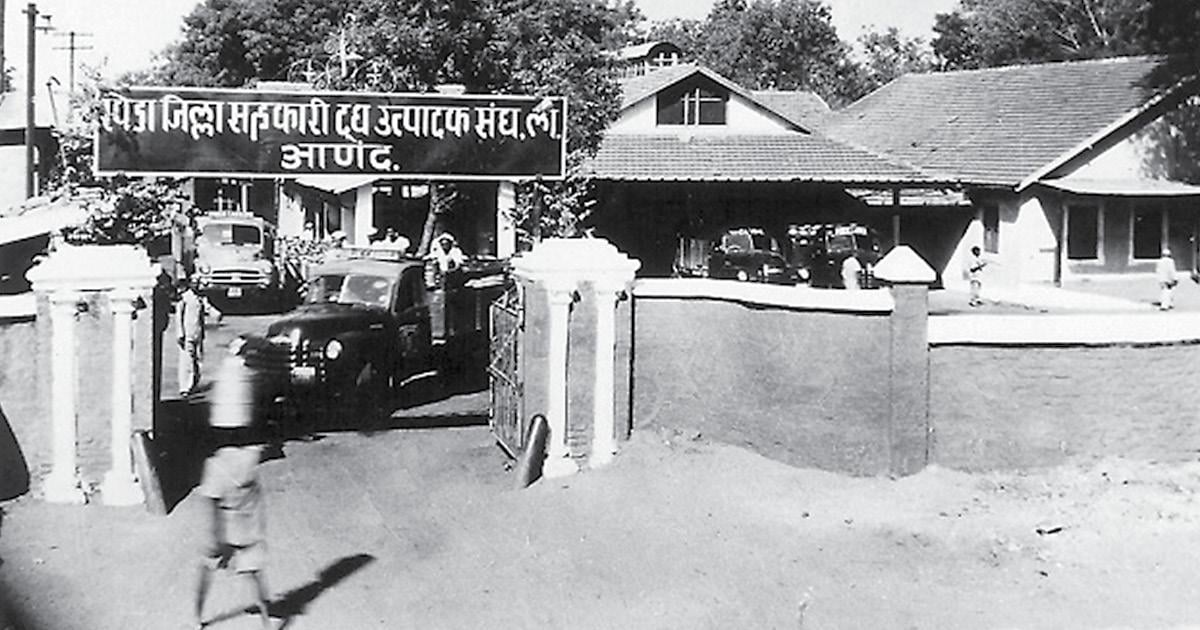
For anyone unfamiliar with the “Milkman of India,” here is a primer: After receiving an engineering degree in India, Kurien made his way to MSU where he earned a master’s degree in mechanical engineering in 1948. When he returned to India the following year, Kurien began working as a dairy engineer at the small Government Research Creamery in Anand—just as the country was in the throes of battle against a milk monopoly.

For years, the Polson brand had been overpowering dairy producers. The giant would buy milk from farmers for next to nothing and sell it for massive profits, while paying little mind to food safety. The country was milk deficient. It was at this time, from the creamery in Anand—now home to the internationally renowned Amul dairy cooperative—that Kurien fought for better treatment and protection for dairy producers of India.

As rural farmers organized local cooperatives, Kurien orchestrated an effort to take ownership of their product, bringing everything in-house. He used his engineering background to build processing plants, and his entrepreneurial mindset to set up marketing campaigns and shipping schematics. That way, local producers would be able to distribute their milk to local consumers. And that meant fresher, safer dairy products for all. In just a few years, the co-op program in Anand blossomed into a movement of millions of farmers, no longer answering to private interests, but rightfully in control of their milk.

The project was such a success in the region, it was named the na­tional model for dairy distribution. This was labeled Operation Flood, in which Kurien helped deliver milk to the masses via farmer-led co-ops across the country.

Today, India is the world’s number one milk producer. And Kurien’s model has been mirrored by China as well as countries in Southeast Asia and Africa.

“He was a real visionary who built a complete infrastructure. Cold storage, transportation, rural man­agement, even schools,” says Amol Pavangadkar (M.A. ’05, Communi­cation Arts and Sciences), professor of practice and a senior specialist in the School of Journalism who is producing and directing a documen­tary about Kurien.

For the film, Pavangadkar is work­ing on two separate productions simultaneously: an Indian version, which will receive wide release in multiple languages, and an Amer­ican version that interweaves Kurien’s journey with that of today’s international students. He hopes to have the films ready for release on Kurien’s 100th birth anniversary later this year.

What fascinates him about Kurien? “Of course I knew who he was, but I didn’t know he went to MSU until 2010. And I have been here since ’02. The story is known worldwide but hasn’t been told from an MSU perspective.”

Newspaper ad celebrating International Milk Day and Dr. Kurien
Amul Dairy today
Amul Dairy, 1950s
Newspaper ad celebrating International Milk Day and Dr. Kurien
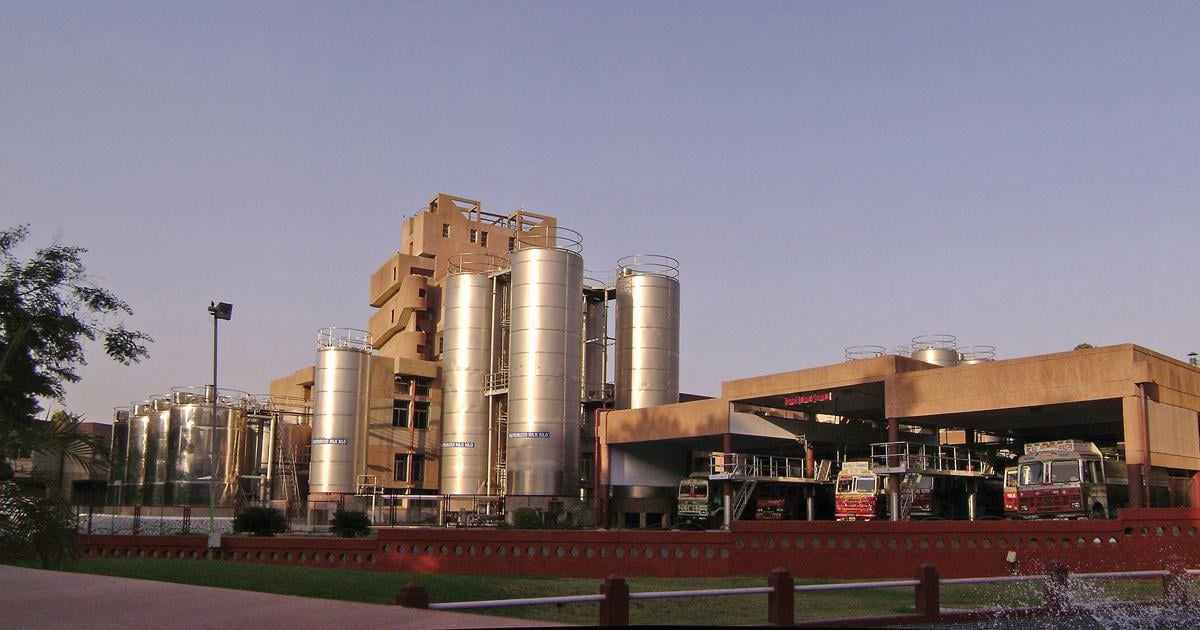
Amul Dairy today
Every year on November 26, Kurien’s birthday, India celebrates National Milk Day in the doctor’s honor.
The Amul plant in Anand, whose model has helped India become the largest milk producer in the world.
The Kaira District Co-operative Milk Producers Union in Anand, known today as Amul, grew from a two-village co-op to a household name in dairy production.
Every year on November 26, Kurien’s birthday, India celebrates National Milk Day in the doctor’s honor.
The Amul plant in Anand, whose model has helped India become the largest milk producer in the world.

01 / 03

Kurien, who died in 2012, won the World Food Prize in 1989, and was awarded all three Parma awards, repre­senting India’s highest civilian honor. He received the MSU Distinguished Alumni Award in ’91, and an honorary doctorate in ’65. To this day, Kurien’s MSU degrees hang prominently in his family home.

“Above the awards and everything else, it’s about pride in what’s been achieved,” Pavangadkar adds. “He defines the mis­sion and mindset of the premier land-grant university.”

It’s true, Kurien’s influential model has changed the course of food distri­bution, safety and management sys­tems around the globe. But there’s so much more to it than milk. Creating change, bettering lives and working together to make the right things happen. It’s the kind of Spartans Will that lives on in East Lansing, where today’s minds are combining research with outreach. Globally engaged for the greater good. The Milkman would approve.


GLOBAL VIEW

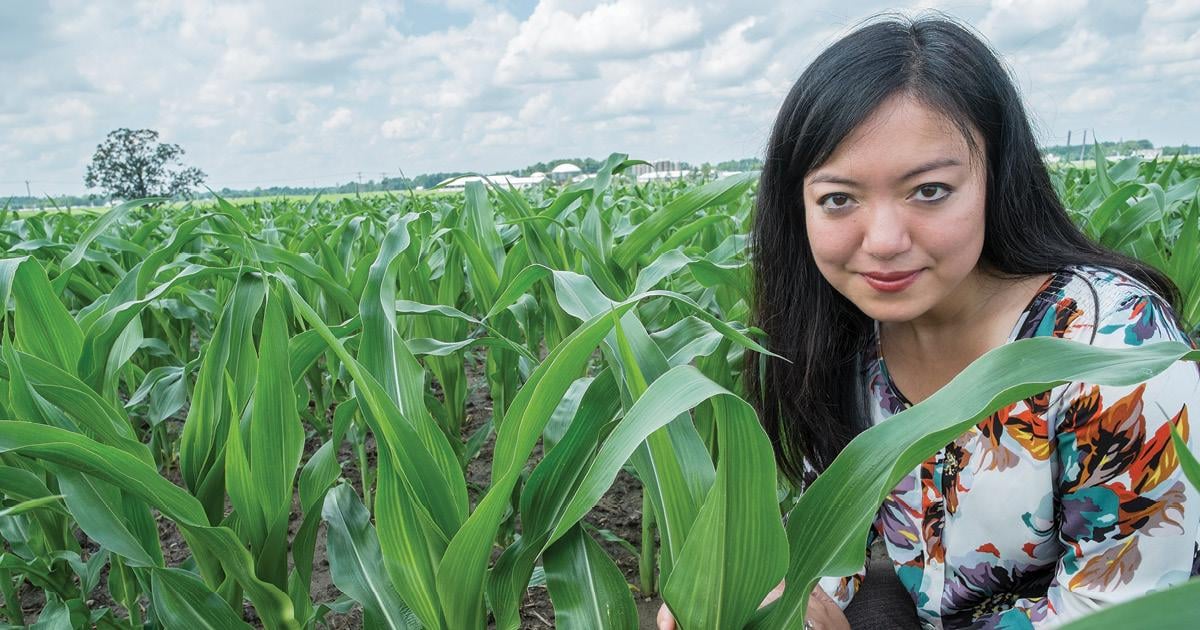
“I am obsessed with food.” So obsessed that Felicia Wu made it her life’s work. As an advocate and scientist in food safety, Wu’s areas of interest bring together global public health, agriculture and trade. Recently ap­pointed to the United Nations Food & Agri­culture Organization Livestock Food Security and Nutrition Scientific Advisory Committee, Wu is work­ing alongside 20 researchers to examine the trans­formation of global supply chains. This research will assess safety concerns and work with nations world­wide to improve food safety and human nutrition.

“It’s about protecting the population at large from con­taminants which are fairly easily preventable,” Wu says of her work. “It’s a matter of applying simple food safety principles.”

But the hurdles are varied, and many simply do not have ways to protect themselves. One major barrier? Electricity. Some places are too far removed from a grid, while others experience sporadic blackouts and unreli­able connections.

Lack of electricity makes cold storage a challenge. In the U.S., a complete cold supply chain is the norm. Food that starts cold, stays cold. And while it is a privilege to keep food at safe temperatures in our homes, those precautions can be traced back down the line from su­permarkets, to shipping containers, to storage facilities. Other countries are not so fortunate.

Wu’s work at MSU and with national and international committees aims to shed light on food safety solutions. One of those solutions is the development of a dry chain. “After harvest, we can dry food, and it will last for quite a long time,” says Wu. And reducing moisture in the food supply is just as essential here as anywhere in the world.

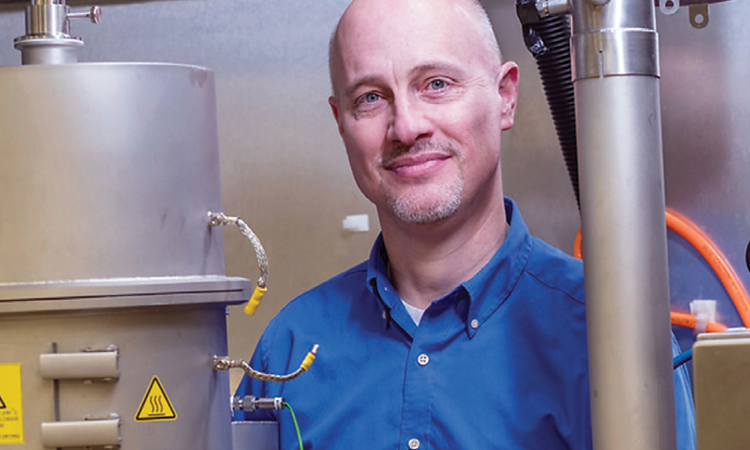
This is where Brad Marks (’89, Agriculture and Natural Resources & Honors College) comes in. Professor and chairperson of the department of biosystems and agri­cultural engineering, Marks’ primary focus is improving microbial safety in ready-to-eat foods.

Marks is leading a low-moisture food systems research group as part of a $9.8 million grant from the U.S. De­partment of Agriculture – National Institute of Food and Agriculture. The project is developing the data and science to help establish safe, consistent operations in the dry foods space. Why is this important? The answer is probably in your pantry. Since the early 2000s, a grow­ing number of E. coli and salmonella outbreaks in the U.S. have been linked to flour. Baking with it is fine, but sneaking a taste of that cookie dough before it hits the oven? It’s not just the eggs that get you.

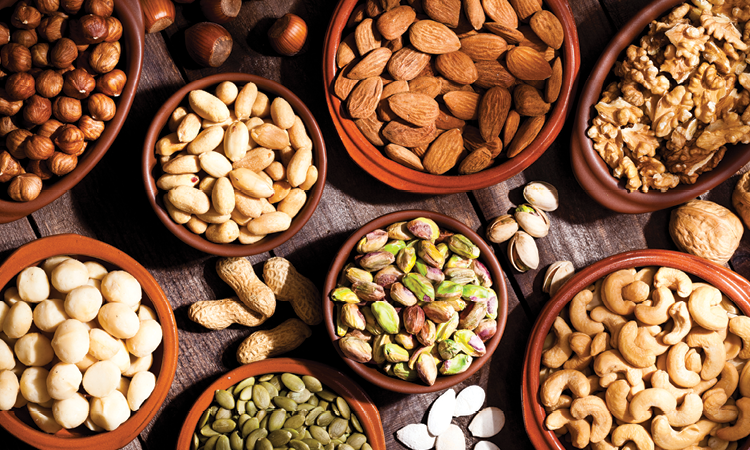
It’s not just the flour either. Outbreaks on American soil have been linked to pistachios, almonds, walnuts and peanut butter, to name a few.

“Historically, people never thought of dry foods as risky, but we’ve started discovering bad bacteria in these places,” says Marks, “and the pathogens are more resistant and tougher to kill.” Since dry foods lack the moisture that lets bacteria easily thrive, these germs grow ever more resilient in the stark settings. “That which doesn’t kill you makes you stronger is true for bacteria, too.”

Brad Marks
Felicia Wu in the field
An assortment of dried nuts
Brad Marks
Felicia Wu in the field
Through his research, Brad Marks is driven to develop improved methods for manufacturing ready-to-eat foods.
Food scientist and John A. Hannah Distinguished Professor Felicia Wu studies the effects of agriculture on human health and the environment.
A growing number of E. coli and salmonella outbreaks have been linked to dry foods like nuts and flour.
Through his research, Brad Marks is driven to develop improved methods for manufacturing ready-to-eat foods.
Food scientist and John A. Hannah Distinguished Professor Felicia Wu studies the effects of agriculture on human health and the environment.

01 / 03

While a low-moisture chain could mitigate the like­lihood of outbreaks in the U.S., Marks knows it’s more than a numbers game. “We’re not just talking about bi­ology and engineering. Consumer protection, cultural research, economic and business factors are all in play.” It’s a big task, and it’s going to take time.

But that is no reason to shy away from your favorite snacks. “Food incidents are rare in this country,” says Wu, “and we should enjoy that privilege.”


KEEPING IT CLOSE TO HOME

As people seek healthier relationships with the food they eat, they find themselves searching out goods produced close to home. There is no doubt that locally sourced food is fresher, tastier and more nutritious than its mass-produced counterparts. But it is also rich in another way: local food supports local farms.

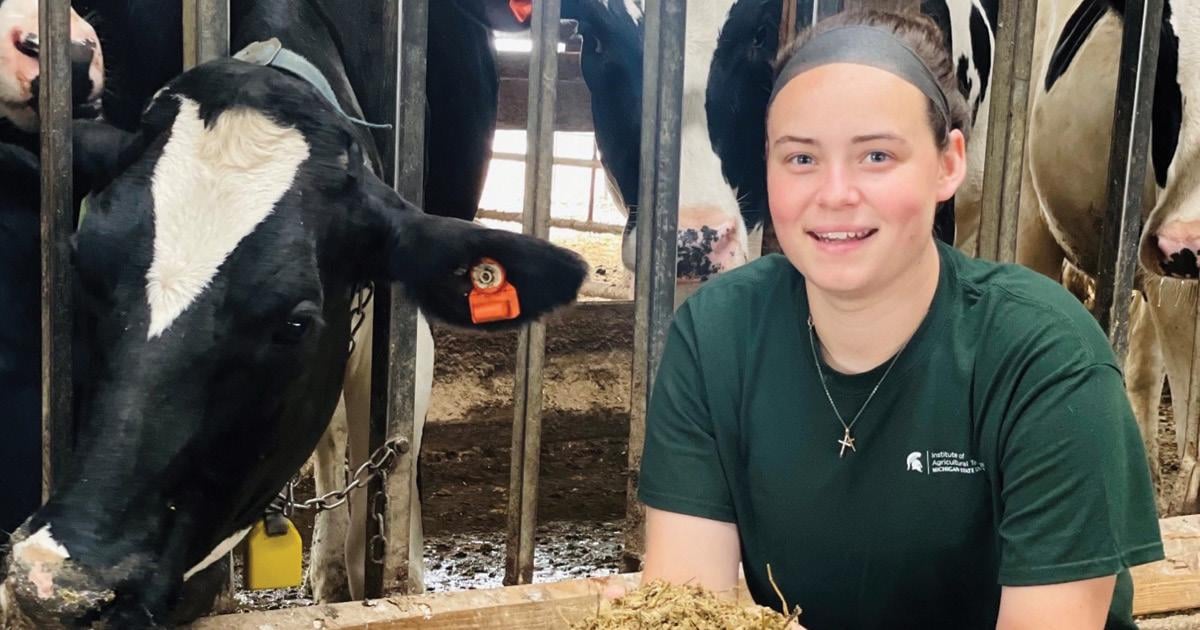
Lynn Olthof is a graduate student in the College of Agriculture and Natural Resources who grew up on a small dairy farm in West Michigan. Today she is researching ways to help smaller Michigan dairy farms com­pete in an ever-expanding market.

“The state of dairy has changed in the last few decades,” she explains. “In the year 2000, farms with more than 1,000 cows were producing less than 20 percent of our milk. Now it’s over 50 percent.”

The goal of the project is to help smaller farms expand to remain viable. With a model based around land and herd expansion, facilities upgrades and becoming more efficient overall, Olthof hopes to give farmers the necessary tools to make the right decisions for their operations.

Dawn breaks over an MSU farm.
Lynn Olthof tending to dairy cows
A visit to a mid-Michigan farm
Dawn breaks over an MSU farm.
Lynn Olthof tending to dairy cows
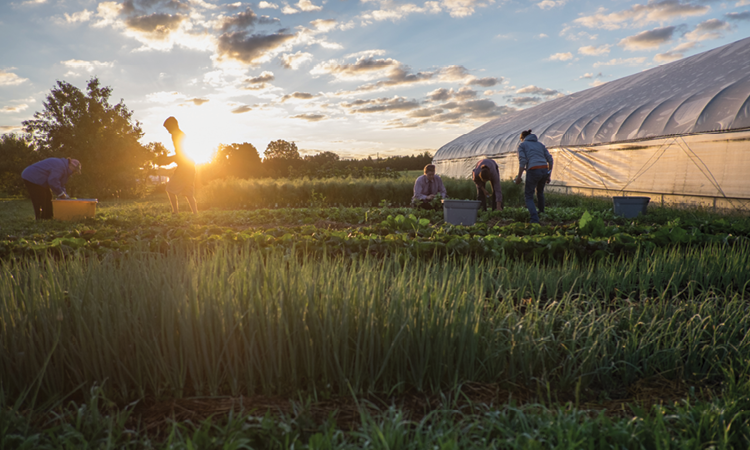
Dawn breaks over the MSU Student Organic Farm. Overall, 17,500 acres in Michigan are used for agricultural, animal and forestry research by MSU.
Lynn Olthof, MSU Graduate student in the College of Agriculture and Natural Resources, tends to dairy cows.
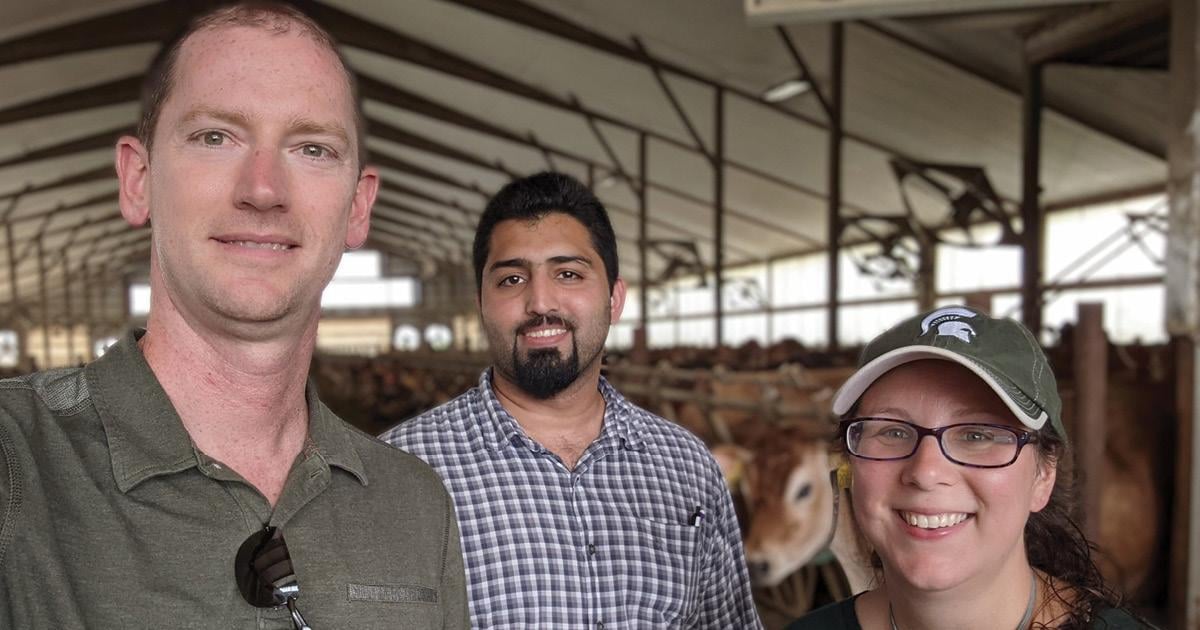
Professor Bradford visits a mid-Michigan farm with extension educator Marianne Murawski and graduate student Muhammed Ibraheem.
Dawn breaks over the MSU Student Organic Farm. Overall, 17,500 acres in Michigan are used for agricultural, animal and forestry research by MSU.
Lynn Olthof, MSU Graduate student in the College of Agriculture and Natural Resources, tends to dairy cows.

01 / 03

Professor and C.E. Meadows Endowed Chair for Dairy Man­agement Barry Bradford, who is overseeing Olthof’s research, knows what a difference this can make. “If we support small farms, we can bring stability to rural economies, support their people and their com­munities.”

This type of work is one of the things he loves about MSU. “We can simultaneously address economic, agricultural and social issues, and we’re able to see the real-world impact in our lifetimes.”

The same is true for Olthof, who is optimistic about the future of dairy farming. Now, many people who grew up on farms are reluctant to go back, and it can be difficult for farm­ers to find good employees. But the industry is quickly moving forward in tech and innovation, opening more and more job prospects.

“People don’t realize the oppor­tunities within the dairy industry,” says Olthof. “Without a dairy back­ground it’s tough to understand.”

That concept is taken seriously at MSU, where strides are being made to introduce agriculture to students who are not from rural areas. The hope is to engage more people in every capacity of the dairy industry, from science and research to human resource and development.

“It’s important for us to be advocates of our own industry.” Olthof’s passion is clear as she speaks of MSU’s new dairy concentration in the Department of Animal Science, which launched fall 2021-22. “The new concentration is a huge step. If we get more people involved, we can support producers, their families and their communities.”

Here in East Lansing, it is true once again: There’s so much more to it than milk.

Tim Cerullo, '08

Alumni

  • About
  • Connect
  • Serve
  • Sparty
  • FAQs

Giving To MSU

  • Campaign
  • Ways to Give
  • Gifts in Action
  • Reasons to Give
  • Opportunities to Support

Spartan Stories

  • All Stories
  • Spartan Magazine Current
  • Spartan Magazine Archive
  • Submissions

Contact Us

(517) 884-1000

Email

univdev@msu.edu

Address

University Advancement 535 Chestnut Rd. Room 300 East Lansing, MI 48824

Follow Us

  • Visit our Facebook page
  • Visit our page on X
  • Visit our Instagram page
  • Visit our LinkedIn page
  • Visit our YouTube page

If you're having accessibility issues, please let us know.

  • Contact Information|
  • Site Map|
  • Privacy Statement|
  • Site Accessibility|
  • Call MSU: (517) 355-1855|
  • Visit: msu.edu|
  • Notice of Nondiscrimination|

SPARTANS WILL|© Michigan State University|